
Type 1 diabetes is a chronic condition where the pancreas produces little to no insulin. It is an autoimmune disease, meaning the body’s immune system mistakenly attacks and destroys the insulin-producing cells in the pancreas. Without insulin, blood sugar cannot enter the cells to provide energy, leading to high blood sugar levels that can cause serious health issues over time.
What is Type 1 Diabetes?
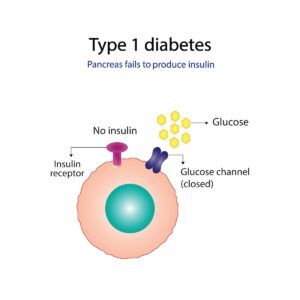
To understand Type 1 diabetes (T1D), it helps to look at how the body processes energy. When you eat, your body breaks down carbohydrates into glucose, a type of sugar. This glucose enters your bloodstream. In a body without diabetes, the pancreas releases a hormone called insulin. Insulin acts like a key, unlocking the cells so glucose can enter and be used for fuel.
In T1D, the “key” is missing. The immune system destroys the beta cells in the pancreas that make insulin. This is different from Type 2 diabetes, where the body still makes insulin but doesn’t use it effectively. T1D is not caused by diet or lifestyle choices. It often appears in children and young adults, though it can develop at any age.
Symptoms of Type 1 Diabetes
The symptoms of T1D often come on quickly, sometimes over just a few weeks. When glucose builds up in the blood instead of entering cells, the body tries to flush it out through urine and looks for alternative energy sources. Common signs include:
- Excessive Thirst and Frequent Urination: The kidneys work overtime to filter and absorb the excess sugar. When they can’t keep up, the sugar is excreted into the urine, pulling fluids from your tissues and leaving you dehydrated.
- Extreme Hunger: Without insulin to move sugar into your cells, your muscles and organs are energy-depleted. This triggers intense hunger.
- Unexplained Weight Loss: Even if you eat more to satisfy hunger, you may lose weight. Without glucose for energy, the body starts burning fat and muscle for fuel.
- Fatigue and Weakness: Deprived of sugar, the body becomes tired and lethargic.
- Blurred Vision: High blood sugar levels can pull fluid from the lenses of your eyes, affecting your ability to focus.
- Slow-Healing Sores: High glucose levels can affect blood flow and the body’s natural healing process.
If left untreated, T1D can lead to a life-threatening condition called Diabetic Ketoacidosis (DKA). This happens when the body breaks down fat too fast, creating acidic compounds called ketones that build up in the blood.
How Type 1 Diabetes is Diagnosed
Doctors use several blood tests to diagnose T1D. Because the symptoms often appear suddenly, diagnosis usually happens quickly once a patient seeks medical help.
- Glycated Hemoglobin (A1C) Test: This measures your average blood sugar level for the past two to three months. It measures the percentage of blood sugar attached to hemoglobin, the oxygen-carrying protein in red blood cells.
- Fasting Blood Sugar Test: A blood sample is taken after you fast overnight.
- Random Blood Sugar Test: A blood sample is taken at a random time, regardless of when you last ate.
- Antibody Testing: To distinguish between Type 1 and Type 2, doctors may check for autoantibodies. These are proteins that indicate the immune system is attacking the pancreas.
- Ketone Testing: A urine or blood test can check for ketones, suggesting the body is burning fat for energy instead of glucose.
Treatment and Management of Type 1 Diabetes
Managing T1D is a 24/7 job. Since the body no longer produces insulin, people with T1D must take insulin every day to stay alive. The goal is to keep blood sugar levels as close to a target range as possible to prevent long-term complications like heart disease, nerve damage, and kidney failure.
Insulin Administration
Insulin cannot be taken as a pill because stomach acid would break it down before it reached the bloodstream. It must be injected or delivered via a pump.
- Injections: Using a fine needle and syringe or an insulin pen to deliver doses under the skin. Most people require a combination of long-acting insulin (to cover background needs) and rapid-acting insulin (taken before meals).
- Insulin Pumps: Small devices worn outside the body that deliver a continuous flow of rapid-acting insulin through a tiny tube placed under the skin.
Monitoring Blood Sugar
Knowing blood sugar levels in real-time is vital for making decisions about food, exercise, and insulin doses.
- Glucose Meters: A traditional finger-prick test where a drop of blood is placed on a test strip.
- Continuous Glucose Monitors (CGM): A sensor worn on the body that measures sugar levels in the fluid between cells every few minutes. It sends data to a phone or receiver, showing trends and providing alerts for highs or lows.
Nutrition and Activity
Food and exercise play a massive role in blood sugar management. Carbohydrates have the biggest impact on blood glucose, so people with T1D learn to count grams of carbs to calculate their insulin doses.
Physical activity generally lowers blood sugar by making the body more sensitive to insulin and allowing muscles to use glucose for energy. However, intense exercise can sometimes cause blood sugar to rise or drop significantly later, requiring careful planning and monitoring.
A Brief History of Type 1 Diabetes
The history of diabetes is a journey from a certain death sentence to a manageable condition.
Ancient Observations
Descriptions of diabetes date back thousands of years. An Egyptian papyrus from 1550 BCE mentions a condition that causes “too great emptying of the urine.” The term “diabetes” was coined by the Greek physician Aretaeus of Cappadocia in the second century CE. He described it as a “melting down of flesh and limbs into urine.” For centuries, there was no treatment. Most patients, especially children with what we now know as Type 1, lived only a few weeks or months after symptoms appeared.
The Discovery of Insulin
The turning point came in the early 20th century. In 1889, researchers discovered that removing the pancreas from dogs caused them to develop diabetes. This proved the pancreas was the source of a substance that regulated blood sugar.
In 1921, at the University of Toronto, Frederick Banting and Charles Best successfully extracted insulin from the pancreatice of dogs. Working with John Macleod and James Collip, they refined the extract for human use. In January 1922, 14-year-old Leonard Thompson became the first human to receive an insulin injection. He was near death, but his blood sugar dropped, and his health improved dramatically.
Evolution of Care
Since 1922, medical knowledge has advanced rapidly:
- 1970s: The first portable blood glucose meters were developed, allowing patients to test their sugar at home rather than only at a doctor’s office.
- 1980s: Synthetic “human” insulin was created using DNA technology, replacing insulin harvested from cows and pigs.
- 1990s: The Diabetes Control and Complications Trial (DCCT) proved that tight blood sugar control significantly reduces the risk of long-term complications.
- 2000s-Present: The rise of CGMs and “closed-loop” systems (often called artificial pancreases) has automated much of the insulin delivery process, using algorithms to adjust insulin based on CGM readings.
Learn More About Type 1 Diabetes
If you want to dive deeper into the world of Type 1 diabetes, nutrition, and exercise, the following resources are excellent places to start:
Websites
- JDRF (Juvenile Diabetes Research Foundation): jdrf.org – A leader in T1D research and advocacy.
- Beyond Type 1: beyondtype1.org – A modern platform offering stories, news, and programs for the T1D community.
- American Diabetes Association (ADA): diabetes.org – Comprehensive information on all types of diabetes.
- Diabetes Canada: diabetes.ca – Resources focused on the Canadian diabetes community and clinical guidelines.
Books
- Think Like a Pancreas by Gary Scheiner: A practical guide to managing T1D with modern technology and logic.
- Pumping Insulin by John Walsh: The “bible” for anyone using an insulin pump.
- The Book of Better by Chuck Eichten: A personal and humorous look at living with T1D.
- Diabetes Solution by Dr. Richard K. Bernstein: A deep dive into low-carbohydrate management for blood sugar stability.
Articles and Journals
- “The Discovery of Insulin” – University of Toronto Heritage: heritage.utoronto.ca/exhibits/insulin
- “Type 1 Diabetes Management in Athletes” – Journal of Clinical Endocrinology & Metabolism.